Understanding Multi-Leg Option Spreads: Bull Call vs Iron Condor
Compare defined-risk multi-leg strategies to manage risk-reward profiles, maximize probability of profit, and reduce capital outlay.
📌 Key Takeaways
- ✓Multi-leg spreads combine long and short options to create defined-risk profiles.
- ✓Vertical spreads limit both maximum profit and maximum loss, reducing initial capital outlay.
- ✓Iron Condors are 4-leg neutral strategies designed to collect net premium in rangebound markets.
- ✓Combining legs lowers net Theta decay and reduces exposure to volatility shocks.
📖 Table of Contents
1. Why Trade Multi-Leg Spreads?
Single option purchases carry significant time decay (Theta) drag. Multi-leg option spreads combine long and short contracts to cap maximum risk, reduce net debit paid, and increase probability of profit.
2. Vertical Spreads: Bull Call & Bear Put
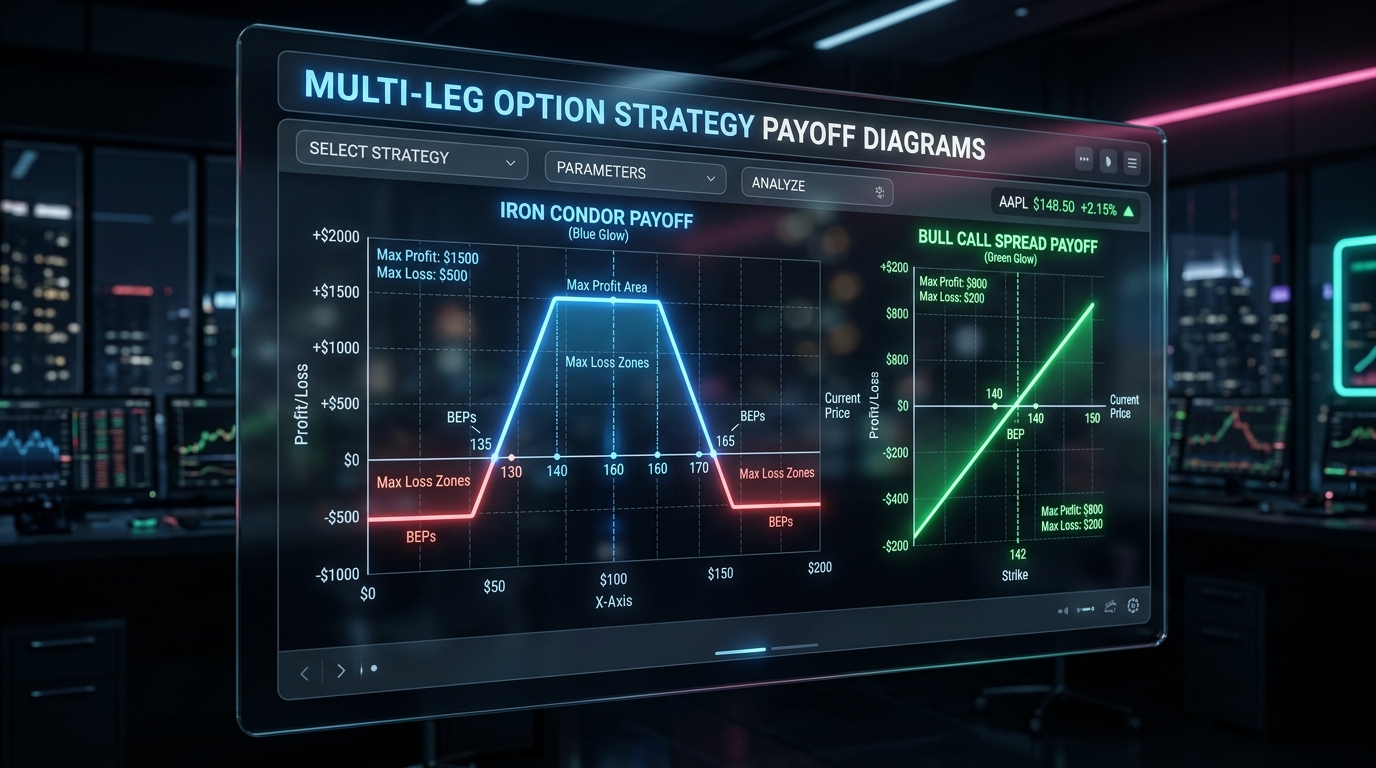
A Bull Call Spread involves buying a lower strike call and selling a higher strike call. By selling the higher strike, the trader collects premium that partially offsets the cost of the long call.
3. Market-Neutral Income: Iron Condors
An Iron Condor combines a Bull Put Spread below current spot price and a Bear Call Spread above spot price. The position collects net credit and achieves max profit if the stock remains bounded between the inner strikes until expiration.
4. Spread Execution & Risk Management
Multi-leg trades should always be entered as single multi-leg limit orders to avoid leg-in slippage. Always calculate break-even points prior to order submission.
📜 In This Article
Try Option Pricing Tools Live
Calculate Black-Scholes theoretical prices, Greeks, and multi-leg strategy payoffs instantly in your browser.
Open Black-Scholes Pricer →